Themes-Wallpaper&Icons&Widgets
- 3.6
- Rating
- 1.00M
- Installs
- Free
- Price
 Analysis by App-foxy
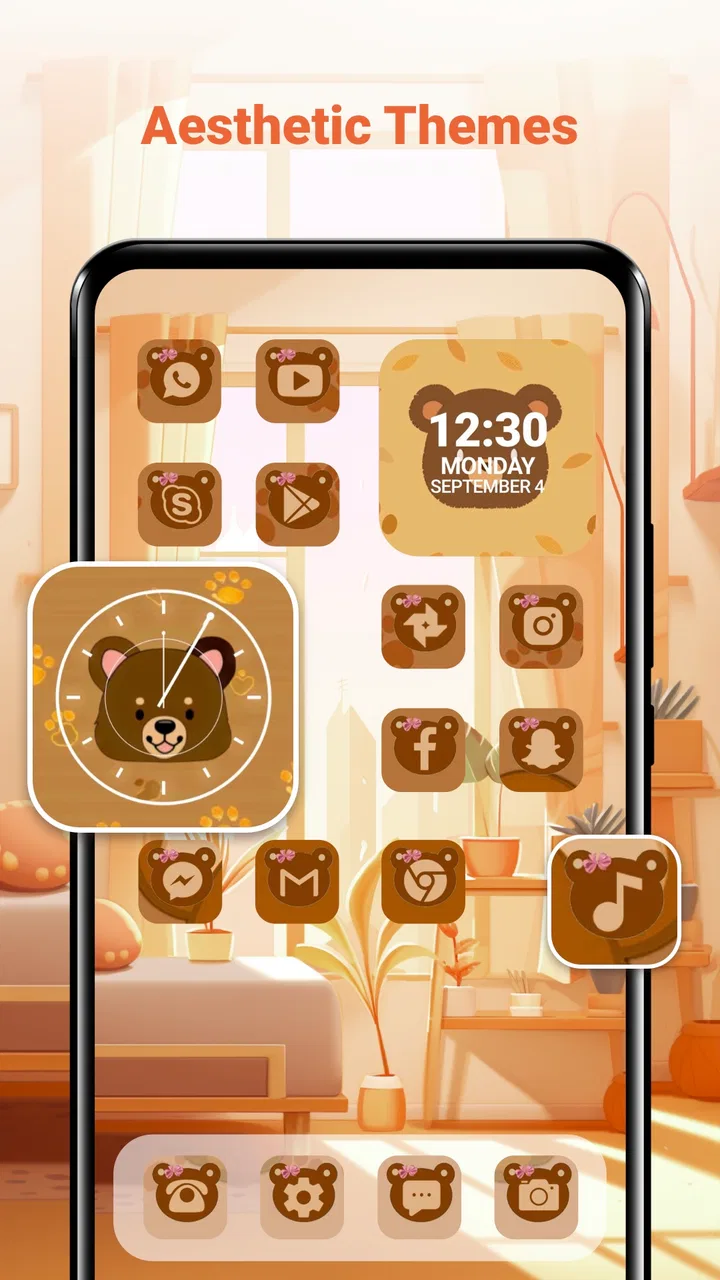
If you want your phone to feel less ordinary without spending time building every screen element yourself, Themes-Wallpaper&Icons&Widgets is worth a look. I tested it as a personalization app from Innova Tool, and my impression is that it aims to make the visual side of Android easier to change in one place: wallpaper, icons, widgets, and broader theme choices are treated as parts of the same makeover rather than separate tasks.
That approach sounds simple, but it matters in everyday use. Changing a wallpaper alone can leave an otherwise familiar home screen untouched. Replacing icons without considering the background can make the result look mismatched. A combined theme app can save time when the goal is a coherent appearance, especially if you want a quick refresh instead of learning a full launcher or design system.
The important question is not whether the app offers attractive visuals. Most personalization tools do that. The better question is whether you prefer convenience over detailed control, and whether you are comfortable exploring free content alongside optional purchases. In my experience, this app is most appealing to people who want a noticeable change with a manageable amount of setup.
You May Also Like

 Blood Strike: 2.5 Anniversary
Blood Strike’s Loadouts Turn Every Drop Into a Tactical Gamble
A close look at Blood Strike’s custom loadouts: how fast access to signature weapons reshapes its battle royale rhythm, rewards preparation, and narrows the gap between fights.

 Pandora - Music & Podcasts
Pandora’s Music Is Easy to Start, but Harder to Recover
Pandora’s strength is its low-effort path from a seed to a station. Its weak spot is how much confidence it asks you to place in connection, setup, and quiet recovery.

 8 Ball Pool
 Is Built on Rivalries, Rematches, and Routine
A close look at the rivalries, rematches, shared routines, and unanswered safety questions that turn a quick pool match into a persistent mobile community.

 Samsung Music
’s Quiet Strength Is Playing What You Already Own
Its reach comes less from spectacle than from dependable access to a personal library. That simplicity is both the app’s strongest retention engine and its ceiling.

 AccuWeather: Weather Radar
AccuWeather Review: A Quick, Clear Forecast for Everyday Decisions
For everyday plans, the best forecast is the one you can understand quickly. AccuWeather makes rain timing, radar, and local conditions easy to act on, with a few trade-offs.

 Hill Climb Racing
Why Hill Climb Racing Still Turns Crashes Into One More Run
A tiny car, a bumpy hill and one more upgrade: Hill Climb Racing keeps resurfacing because its simple chaos makes every near-miss feel personal.
More From Our News Desk



What I considered before recommending it
I judge a personalization app on four practical points: how quickly I can reach a usable result, how consistent the different elements look together, how much control remains after applying a theme, and whether the free experience feels worthwhile. Themes-Wallpaper&Icons&Widgets is free to install, has an Everyone content rating, and works on Android devices running version 7.0 or later. That makes it accessible to a broad range of phones, including older devices that may not support newer customization tools.
Its scale also gives some context. The app has passed over a million installs, with an average rating of 3.6 from around 2.4 thousand ratings and 261 written reviews. I would read that as evidence of real interest rather than a guarantee that every user will enjoy it. Personalization is unusually subjective: one person’s clean home screen is another person’s cluttered one, and an icon style that looks polished on one display may feel too decorative on another.
The app was released on September 27, 2023, and its current version is 2.10.0. I mention the version because personalization apps can change their layout and catalog over time. If you have used an earlier release, menus and available theme choices may not feel exactly the same. Still, the central idea remains clear: use a collection of visual elements to reshape the phone’s appearance without manually sourcing every asset.
Before choosing a theme, I recommend deciding what kind of change you actually want. If you only dislike your current background, a standalone wallpaper app or the phone’s built-in picker may be enough. If you want a coordinated screen with matching visual elements, this app makes more sense. If you want to redesign the entire interface, including behavior and navigation, you may be looking for a launcher rather than a theme catalog.
Start with the screen you already use
A useful first step is to look at your current home screen before opening the catalog. Count the rows of icons you regularly use, notice whether you keep a clock or weather widget visible, and check which areas of the wallpaper remain uncovered. This prevents a common mistake: choosing an attractive background that hides behind icons or makes text difficult to read.
I also found it helpful to separate the visual decision from the practical one. A dark, detailed wallpaper may look impressive in a preview but make everyday app labels harder to scan. Bright icon packs can be fun for a weekend refresh but tiring if you rely on your phone for work. The strongest choice is usually the one that still feels readable when you are checking messages quickly, not only the one that looks best in a screenshot.
Another consideration is how much of the phone you want to change at once. Applying wallpaper, icons, and widgets together creates the biggest transformation, but it also makes it harder to identify which element you dislike afterward. I prefer trying one visual direction first, then adding the other pieces gradually. That small habit reduces the cost of experimenting and keeps the home screen from becoming visually busy.
Where the combined approach is genuinely useful
The main strength is convenience. Instead of hunting for a background in one place, an icon design elsewhere, and a widget style from another source, I can begin with a unified theme concept. That is particularly useful when I want a seasonal change, a calmer look, or a more distinctive screen without spending an evening comparing isolated downloads.
The combination also helps users who are not confident designers. Matching colors and shapes across several separate apps takes judgment. A theme-focused app gives you a starting point, so you can make a decision based on an overall mood instead of trying to build a visual system from scratch. For a first customization project, that lower barrier is more valuable than having hundreds of tiny settings.
There is a practical benefit for households too. If someone is helping a family member personalize an Android phone, a coordinated collection can be easier to explain than several unrelated tools. You can begin with the look they like, then adjust the home screen around the apps they actually use. This is less intimidating than introducing a launcher, icon-management workflow, and separate widget editor all at once.
Three details that improve the result
My first tip is to treat the widget as an anchor rather than an extra decoration. Place it where you naturally look first, then choose a wallpaper whose most detailed area does not compete with it. If the widget is visually strong, a simpler background usually produces a more comfortable screen. This is a small design decision, but it often determines whether the finished layout feels intentional.
My second tip is to test a theme during normal use before committing to it. Open the apps you launch most often, read notification text, and check the screen in both indoor and outdoor light. A theme can look balanced in a preview and still create poor contrast once real icons and labels are present. I would not judge a design only from its thumbnail.
My third tip is to keep a mental record of your original arrangement. Before changing everything, note which icons are on the first page and where your most-used widget sits. If the new design feels attractive but slows you down, you can reverse the visual experiment without having to rediscover your everyday layout. This is especially useful if you are trying several styles in one sitting.
A fourth trade-off is worth mentioning: visual consistency can reduce flexibility. When wallpaper, icons, and widgets are designed to belong together, replacing one item with something unrelated may weaken the overall look. That is not a flaw in the app so much as a consequence of choosing a coordinated theme. I see it as a good reason to prioritize the elements you use most rather than trying to preserve every part of a theme unchanged.
How it compares with the usual alternatives
The simplest alternative is Android’s built-in personalization. That route is usually better when you only need a background, a color adjustment, or a basic layout change. It tends to involve less exploration and fewer decisions. For someone who wants the phone to remain familiar, the built-in tools are the sensible choice.
A dedicated wallpaper app is more focused. It may be preferable if the background is the only part of the phone you care about and you already like your existing icons and widgets. In that situation, installing a broader theme app can feel like more than you need. Themes-Wallpaper&Icons&Widgets earns its place when the user wants several visual layers to change together.
Icon-pack tools offer another kind of advantage. They are often a better fit for people who already know the exact icon style they want and are comfortable handling compatibility with their launcher. That path can produce a more precise result, but it may require more setup and more patience. I would choose the reviewed app for speed and choose a specialized icon workflow for fine control.
Launchers sit at the other end of the spectrum. They can change how the home screen behaves, not merely how it looks, and are therefore more suitable for users who want custom gestures, layouts, or navigation habits. The trade-off is learning a new interface and potentially rebuilding the home screen more thoroughly. If your goal is visual refresh rather than a different way of operating the phone, a theme app is the less disruptive option.
There is also a middle ground: using separate wallpaper, icon, and widget apps. That can give you more choice in each category, but it shifts the responsibility for matching them onto you. I would recommend that route to someone who enjoys experimenting and does not mind comparing styles manually. For everyone else, a coordinated starting point is more efficient.
Free access, optional spending, and the real cost
The app is free, but it includes in-app purchases ranging from $1.99 to $39.99 per item. That range is important when deciding whether it fits your budget. I would begin by exploring the free experience and identifying whether it already contains enough variety for your needs. A free installation is useful only if the available choices make the phone feel better without pressuring you into buying something immediately.
Think of the purchase decision as a cost-of-switching question. If you apply a theme and then decide it is not right, the time cost is usually greater than the installation itself: you may need to restore your old arrangement, reconsider icon placement, and remove visual elements that no longer work together. I suggest taking screenshots of your current home screen before experimenting. That simple backup makes switching between styles much less frustrating.
I would also avoid buying based only on a striking preview. The most important test is whether the theme works with your own app mix and screen habits. A design can be appealing in a catalog image but less useful when your first page contains many unrelated app icons. Spend time with the free options first, and only consider a paid item if its specific style solves a problem you actually have.
Because the app is rated for Everyone, it is approachable for general household use. That does not mean every theme will suit every age or taste; it simply makes the app’s intended audience broad. Parents choosing a visual refresh for a child’s phone, older users wanting a clearer mood, and adults looking for a personal style can all approach it differently.
Who should use it, and who should skip it?
I think it is a good match for Android users who want a quick visual change, prefer coordinated elements, and do not want to learn a complex customization system. It is also useful for people who regularly get bored with their home screen and enjoy changing its mood without rebuilding the phone from the ground up.
It is less suitable for users who demand exact control over every icon, widget position, animation, and launcher behavior. Those users may feel limited by a theme-centered workflow and would probably be happier assembling their own setup with specialized tools. It is also not the best choice if your only goal is a single wallpaper, because the broader catalog may add unnecessary decisions.
I would skip it as well if your current phone already has a carefully tuned layout that you rely on for speed and accessibility. A visual makeover can disturb familiar habits, especially when the new icons are less recognizable than the originals. In that case, a restrained background change may deliver the refresh you want without creating a learning curve.
One realistic scenario is a user preparing a phone for a new school term or job. They may want a calmer first page, a readable widget, and icons that feel less distracting. I would start by choosing the least busy theme direction, keep only essential apps on the first screen, and test notification readability for a day. If the phone remains easy to scan, the makeover has improved daily use rather than merely changing its appearance.
What the experience feels like over time
The first session is likely to be the most enjoyable because the visual difference is immediate. The longer-term value depends on whether the chosen design supports your habits. A theme that looks fresh for five minutes but makes common apps harder to identify will lose its appeal quickly. I prefer treating the app as a source of starting points, not as a reason to keep changing the phone every day.
That mindset also makes the app more economical. You do not need to apply every available element. Sometimes a wallpaper and one restrained widget are enough, while the original icons continue to provide the fastest recognition. On another phone, a complete coordinated look may be exactly what is needed. The ability to stop halfway is one of the better ways to avoid over-customizing.
My overall impression is positive but measured. Themes-Wallpaper&Icons&Widgets makes personalization approachable by bringing several visual categories into one experience. Its strongest advantage is not unlimited control; it is the reduced effort required to move from an ordinary home screen to something with a clearer visual identity.
My recommendation is to try it if convenience and coordinated design matter more to you than deep technical control. Explore the free choices first, save your original layout, and judge the result during normal phone use rather than from previews alone. If you want a complete launcher overhaul or a highly precise icon system, choose a more specialized alternative. For a straightforward Android refresh that can include wallpapers, icons, and widgets together, this free app from Innova Tool is a reasonable place to begin.
FAQs for Themes-Wallpaper&Icons&Widgets
01What is Themes-Wallpaper&Icons&Widgets used for?
Themes-Wallpaper&Icons&Widgets is a customization app designed to change the appearance of your mobile device. It typically brings together wallpapers, icon packs, widgets, and complete visual themes in one place. After installing it, you can browse different styles, preview how they look, and personalize your home screen and lock screen without having to search for each design element separately.
02Is Themes-Wallpaper&Icons&Widgets compatible with every Android or iOS device?
Compatibility can vary depending on your operating system, device model, screen resolution, and launcher. Wallpapers generally work on most supported phones, while icon packs and widgets may require specific Android launchers or system features. iOS users may have more limitations because Apple restricts certain types of home-screen customization. Check the app listing and device requirements before downloading.
03Does the app offer free themes, wallpapers, icons, and widgets?
The app may include a selection of free customization materials, but some premium themes, high-resolution wallpapers, icon collections, or advanced widgets can require payment, subscriptions, or watching advertisements. Before applying a design, review whether it is marked as free or premium. Also check the purchase terms carefully, especially if the app offers recurring subscription plans.
04How do I apply a theme, wallpaper, icon pack, or widget?
After choosing a design, open its preview and follow the on-screen instructions to download or apply it. Wallpapers can usually be set directly from the app, while icons may require a compatible launcher or a system shortcut process. Widgets are normally added by pressing and holding an empty area of the home screen, selecting the widget option, and choosing the desired design.
05Does Themes-Wallpaper&Icons&Widgets affect phone performance or battery life?
Static wallpapers and simple icon packs usually have little effect on performance. However, animated wallpapers, constantly updating widgets, live effects, and background services may consume additional battery, memory, or mobile data. During testing, users should monitor battery usage and disable unnecessary animations or widgets if the phone becomes slower, warmer, or less responsive after customization.
Pros
- Large collection of wallpapers
- icons
- widgets
- and matching themes
- Customization tools make it easy to refresh your home screen style
- Regular content updates provide new designs to explore
- Supports multiple visual styles
- from minimal to colorful layouts
- Preview options help you check the look before applying changes
Cons
- Some premium designs or features may require a subscription
- App performance can vary on older or less powerful devices
- Certain widgets may need extra setup after applying a theme
- Frequent ads may interrupt browsing for free users
- Compatibility can differ between Android launchers and devices

Themes-Wallpaper&Icons&Widgets
Gallery